Care
When Should You See a Chiropractor for Back Pain?
Most back pain settles on its own. Some does not. How to tell the difference, what an evaluation involves, and what to expect from a first visit at All Square.
Most episodes of back pain improve within a few weeks with sensible self-management. Some do not, and some keep returning. Knowing which situation you are in is the useful question, because it determines whether waiting is reasonable or whether waiting is costing you.
This article is written to help with that decision. It is general guidance, not a diagnosis.
When waiting is reasonable
A first episode of back pain with an obvious trigger, no symptoms spreading into the legs, and steady improvement over the first week or two often settles with a few basics: keep moving within tolerance, avoid long periods of complete rest, sleep, and give it time.
If you are two weeks in and clearly better than you were, you are probably on the right track.
When an evaluation makes sense
Some patterns suggest that waiting is not the best plan:
- It is not improving after two to three weeks, or it improved and then plateaued.
- It keeps coming back. Two or three episodes in a year is a pattern, not bad luck.
- Symptoms are spreading into the buttock, thigh, or lower leg.
- You notice numbness, tingling, or weakness in a leg.
- It is limiting things you care about: training, sport, sleep, work, playing with your kids.
- You have tried generic advice and it has not held.
- You are compensating: bending, lifting, or moving differently to avoid it, and those workarounds are becoming habit.
None of these mean something is seriously wrong. They mean the contributing factors are worth understanding rather than guessing at.
When to seek urgent care instead
A small number of situations need same-day medical attention, not a chiropractor. Go to an emergency department or call your physician immediately if back pain comes with:
- New difficulty controlling bladder or bowel
- Numbness in the groin or inner thighs
- Rapidly worsening weakness in the legs
- Back pain following significant trauma
- Back pain with fever, unexplained weight loss, or a history of cancer
These are uncommon, but they are not the situations this article is about.
What an evaluation at All Square involves
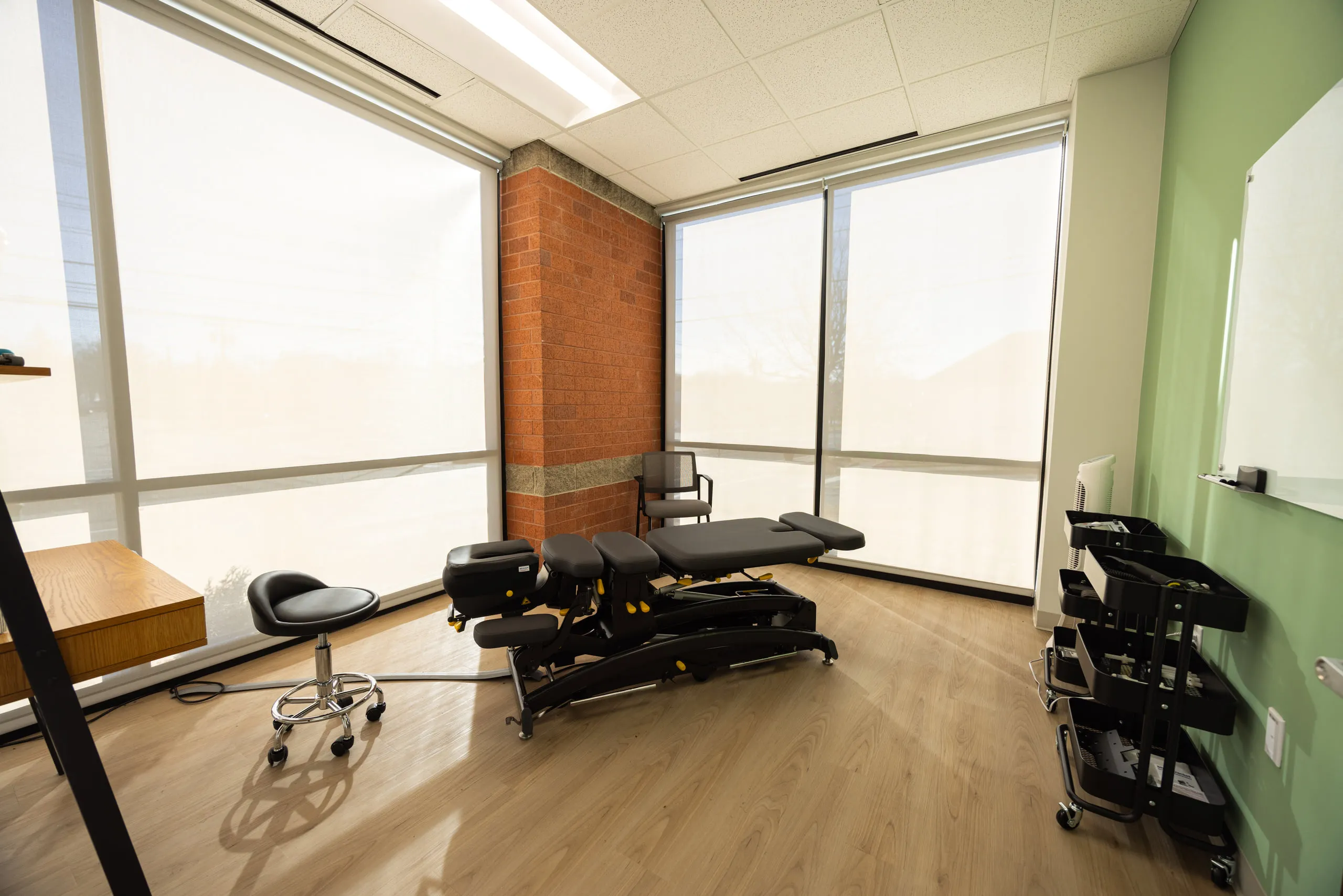
The first visit is a full evaluation rather than a quick look followed by treatment. It covers your history, then how you move: where range and strength sit, how the hips and spine work together, and what the pattern suggests is contributing.
Treatment on the first visit is common but not automatic. The point of the visit is to understand the problem before deciding what to do about it. You leave knowing what was found and what the plan looks like.
A plan may combine chiropractic management, therapeutic exercise, mobility work, and strength training, chosen for your situation rather than applied as a routine. Appointments are one-on-one with Dr. Andrew, and you see the same provider each time.
Not sure? Start with a conversation
If you are unsure whether what you are dealing with warrants a visit, a free 20-minute Discovery Call exists for exactly that. Describe what is going on and what you have tried, and you will get an honest answer about whether All Square is the right place, or where else might be a better fit.
The information on this website is provided for general education and does not constitute medical advice, diagnosis, or treatment. Individual results vary. Nothing here creates a doctor–patient relationship or replaces an in-person evaluation.